Kedarnath, one of the holiest shrines in India and a major part of the Char Dham Yatra, attracts millions of pilgrims every year. Yet, despite its popularity, many travelers are confused about which railway station is closest to Kedarnath and how to reach the temple smoothly. The answers are not always straightforward because Kedarnath is located in a high Himalayan region where railway connectivity does not exist. That means the train journey ends long before you reach the mountains—and the rest of the trip requires a combination of road travel and trekking or helicopter services.
Understanding the nearest railway station becomes incredibly important because it helps travelers plan their itinerary, book tickets, estimate travel time, and avoid unnecessary travel mishaps. The journey to Kedarnath can be demanding, so proper planning makes all the difference. Choosing the wrong station can add hours of extra travel, especially during peak pilgrimage season when roads are crowded and weather conditions unpredictable.
In this detailed guide, you’ll discover not just the nearest station but also the best station based on your travel style, whether you’re a budget traveler, a family on pilgrimage, a solo explorer, or someone visiting India for the first time. Every route, distance, and transportation detail is broken down clearly so you can make a confident decision.
We’ll also dig deeper into local travel tips, transportation options, trekking details, weather considerations, and more—all written in a natural, human-like tone that feels like you’re getting advice from a seasoned traveler who has already completed the journey multiple times.
Understanding Kedarnath’s Location
Kedarnath is not just another pilgrimage destination; it is a sacred Himalayan temple nestled at an extraordinary altitude of 3,583 meters (11,755 ft) in the Rudraprayag district of Uttarakhand. Surrounded by snow-clad Himalayan peaks, dense forests, cascading rivers, and unpredictable weather patterns, Kedarnath stands proudly as one of the twelve Jyotirlingas of Lord Shiva. Because of its geographical placement in a remote valley and its spiritual significance, millions of devotees attempt the journey every year—despite the difficult terrain that makes accessibility a challenge.
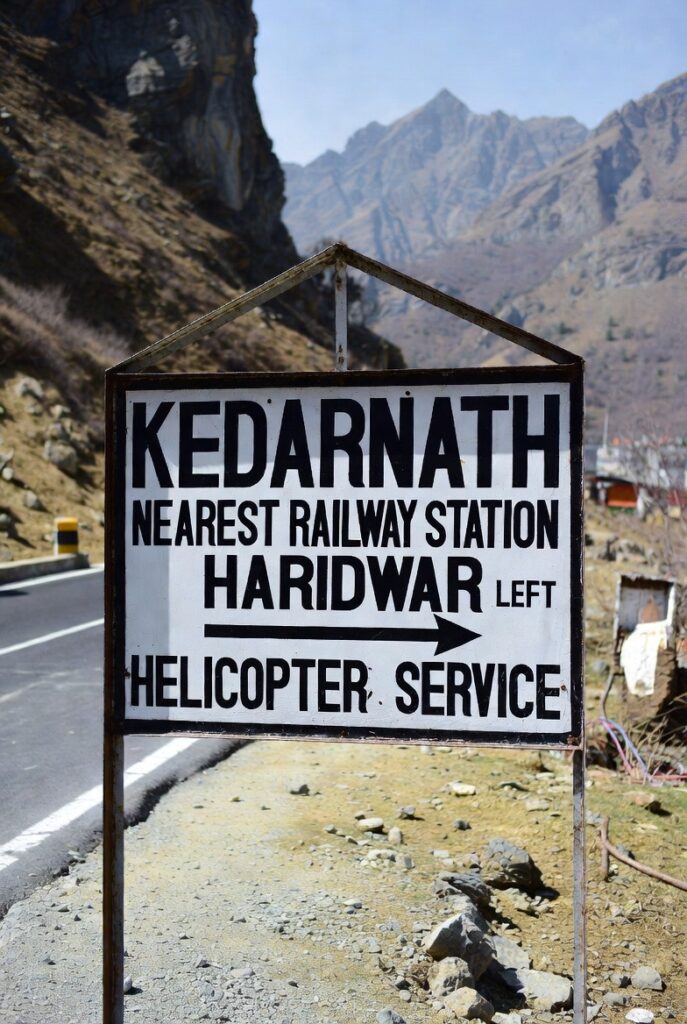
One of the biggest reasons many travelers struggle with their planning is the misconception that trains can reach Kedarnath or at least come close to it. In reality, railways cannot be constructed directly in this zone because the Himalayas here are young, fragile, and constantly shifting. The land is prone to landslides, heavy rainfall, and snowfall, which makes building rail infrastructure practically impossible. Instead, the government has created well-maintained road routes and helicopter services to ensure safe passage, but a direct railway remains nonexistent.
Understanding Kedarnath’s difficult terrain helps pilgrims appreciate why reaching the temple requires a mix of train + road + trek or helicopter. The road journey itself can feel magical—passing through towns like Rishikesh, Devprayag, Srinagar, Rudraprayag, Guptkashi, and Sonprayag—each filled with natural beauty and cultural charm. But it’s also long, winding, and slow, especially during peak season when thousands of vehicles move toward the Char Dham routes at the same time.
Once travelers understand the geographical constraints and unique terrain, planning becomes much easier. They begin to see why choosing the correct railway station is crucial. Picking a distant station could add 4–6 extra hours to your trip unnecessarily, while choosing the right one can save both time and energy. The next sections break down each station and help you decide what works best for your travel style.
Closest Railway Stations to Kedarnath
Reaching Kedarnath begins with choosing the right railway station because no direct rail line goes into the high-altitude Himalayan zones. Instead, three major stations serve as gateways to the Kedarnath Yatra: Rishikesh, Haridwar, and Dehradun. Each of these stations has its own advantages—some offer better connectivity, some have superior facilities, and others offer faster onward road access. Understanding these differences will help you plan the most efficient and comfortable pilgrimage.
Although many websites claim a single “nearest railway station,” the truth is more practical: Rishikesh is geographically closest, but Haridwar and Dehradun have better train availability. A traveler arriving from southern or western India may find it easier to get a direct train to Haridwar, while someone flying into Delhi might prefer a quick train to Dehradun. Meanwhile, budget travelers or those wanting a smooth onward bus journey often choose Rishikesh because it is the official starting point of the Char Dham Yatra.
Another reason multiple stations matter is traffic. During peak season—especially May, June, and around Diwali—the roads approaching Sonprayag become crowded. If you pick a station with more travel options, you can adjust your timings and avoid long jams. Haridwar, for example, offers early morning buses to Sonprayag, which many pilgrims rely on. Dehradun, on the other hand, gives you more private taxi choices and a more relaxed starting point.
Before diving into each station, it’s essential to remember that your final road journey always ends at Sonprayag, from where you must switch to a government shuttle to Gaurikund, the base of the Kedarnath trek. The journey—no matter which station you choose—will take time. But selecting the right train station can reduce the effort and enhance your overall travel experience. Now let’s explore all three stations in detail.
Rishikesh Railway Station
Rishikesh is considered the nearest major railway station to Kedarnath, located approximately 216 km from Gaurikund, the starting point of the trek. What makes Rishikesh an excellent option is not only its geographical closeness but also the fact that it is the official gateway to the Char Dham Yatra. This means buses, shared jeeps, taxis, and government transport services are all easily available from here, especially during pilgrimage season.
One of the biggest reasons travelers prefer Rishikesh is the spiritual atmosphere. The town carries an energy of peace and devotion, with its beautiful Ganga ghats, famous suspension bridges (Lakshman Jhula and Ram Jhula), and countless ashrams. Starting your Kedarnath Yatra from such a sacred place adds meaning to the journey for many pilgrims. Logistically, it also offers advantages—accommodation is affordable, travel agencies are abundant, and transportation is frequent and well-organized.
However, Rishikesh has a limitation: fewer long-distance trains terminate here compared to Haridwar. This means you may need to catch a connecting train or deboard at Haridwar and travel to Rishikesh by road or local train (a short 20–25 km journey). But once you arrive in Rishikesh, the onward trip becomes smoother. Early morning buses leave for Sonprayag/Guptkashi daily, and many private taxis provide doorstep pick-up services.
Travel time from Rishikesh to Sonprayag is usually 8–9 hours, depending on weather and road conditions. Along the way, you’ll pass through scenic points like Devprayag (where the Alaknanda and Bhagirathi rivers meet to form the Ganga) and Rudraprayag. The journey is long but incredibly picturesque.
If you prefer spiritual ambiance, easy transportation, and want to start from the traditional entry point of the Char Dham route, Rishikesh is the best and closest station for you.